
The application of predictive analytics in healthcare has changed dramatically over time. Hospitals now use data and AI models to predict patient needs, manage admissions, and plan treatments. These systems help doctors act faster and use resources better. In many cases, algorithms now help decide who gets care, attention, or early support.
But this progress also brings risk. One such major risk is algorithmic bias.
Algorithmic bias happens when AI systems make unfair decisions that affect certain groups more than others. In healthcare, this is dangerous. It can affect patient safety, trust, and outcomes. For US healthcare systems that must follow HIPAA, civil rights laws, and new AI rules, reducing bias is not optional. It is a medical, ethical, and legal duty.
This blog explains what algorithmic bias is, how it enters healthcare AI, and how US healthcare systems can reduce it in a practical way.
What Is Algorithmic Bias in Healthcare Predictive Analytics?
Algorithmic bias happens when a model gives unfair results to certain groups, such as based on race, income, gender, age, or location. Most of the time, this bias is not intentional. It comes from the data the system learns from. When predictive analytics in healthcare are built on flawed data, the results can be stark.
For example, consider a model designed to identify patients who require high-level care. If the model uses healthcare spending as a proxy for illness severity, significant bias can emerge. Patients from low-income backgrounds often pay less for health care because they can't get it, don't have enough insurance, or don't have any insurance at all. As a result, even severely ill patients may be incorrectly classified as “low risk.” This misclassification creates a feedback loop: the system thinks that fewer people using services means better health, which leads to fewer care recommendations and makes health disparities worse.
Bias becomes harder to spot in healthcare because of privacy rules. HIPAA often requires removing data like races or zip codes. But without these details, bias can hide. The model may look fair but still harm certain groups. Ethical AI in healthcare means understanding not just the math, but also the real human stories behind the data.
Common Types of Algorithmic Bias in Healthcare AI
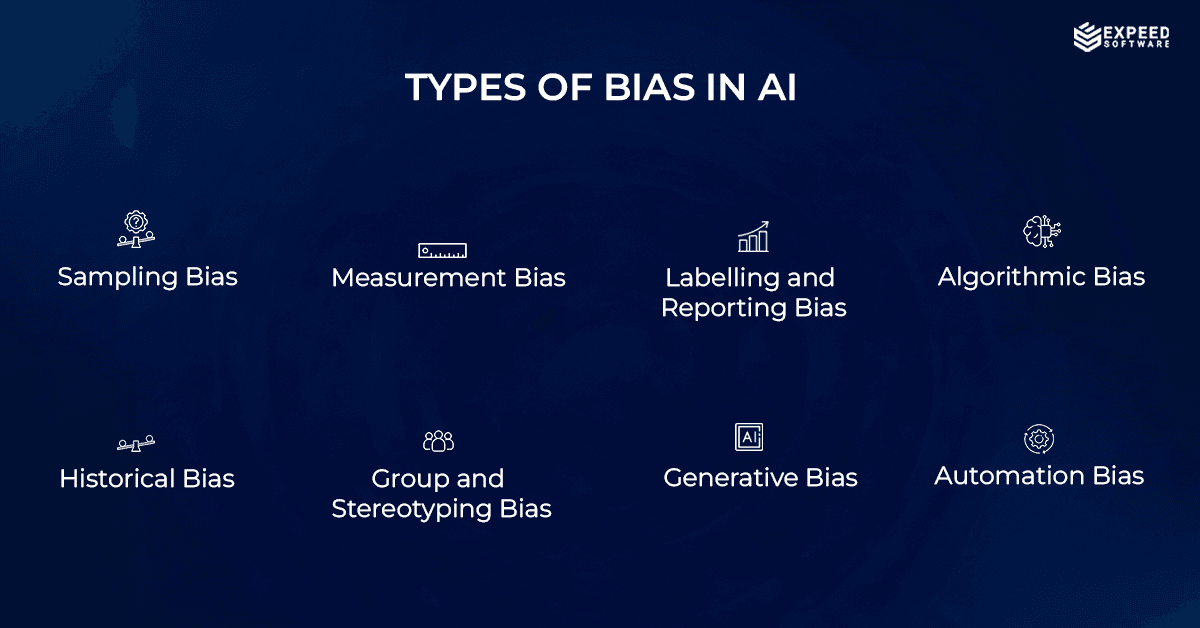
Bias can enter the system at many stages, from data collection to how doctors use the output. Below are the most common types.
1. Sampling Bias
This happens when the training data does not represent everyone. For example, a model trained mostly on data from large urban hospitals may not work well for rural or tribal communities. If most data comes from one race or income group, the model will perform poorly for others.
2. Measurement Bias
This happens when the system uses the wrong signals. For example, using emergency room visits to measure sickness is flawed. People without primary care use the emergency room (ER) more often, even for minor issues. Wealthy patients may be very sick but rarely visit the ER. The model then judges access to care, not real health.
3. Labelling and Reporting Bias
Doctors write medical notes using subjective language. One patient may be described as “agitated,” another as “in pain,” even if symptoms are the same. Some groups are more likely to receive negative labels. AI systems learn from this language and turn bias into data.
4. Algorithmic (Optimization) Bias
Many models aim for high overall accuracy. But this can hide poor performance for small groups. A model may be 95% accurate overall but fail badly for a minority group. Because the group is smaller, the failure does not affect the total score much.
5. Historical Bias
AI learns from past data. If certain groups were treated unfairly in the past, that unfairness exists in the data. The model may learn that these groups “usually” receive less care and repeat the same pattern in the future.
6. Group and Stereotyping Bias
This happens when the model relies on group averages instead of individual data. A patient may be flagged as high risk based on race or age rather than their actual test results. This can lead to over-treatment or missed diagnoses.
7. Generative Bias (LLMs)
AI tools that write or summarize medical notes may add harmful labels that were never written by a doctor. These systems learn from large text sources that include human bias. Once added, these labels can follow a patient forever.
8. Automation Bias
Doctors may trust AI too much. If a system gives a confident answer, clinicians may follow it even when it conflicts with their own judgment. This turns a biased output into a biased treatment decision.
A Practical Framework to Reduce Algorithmic Bias
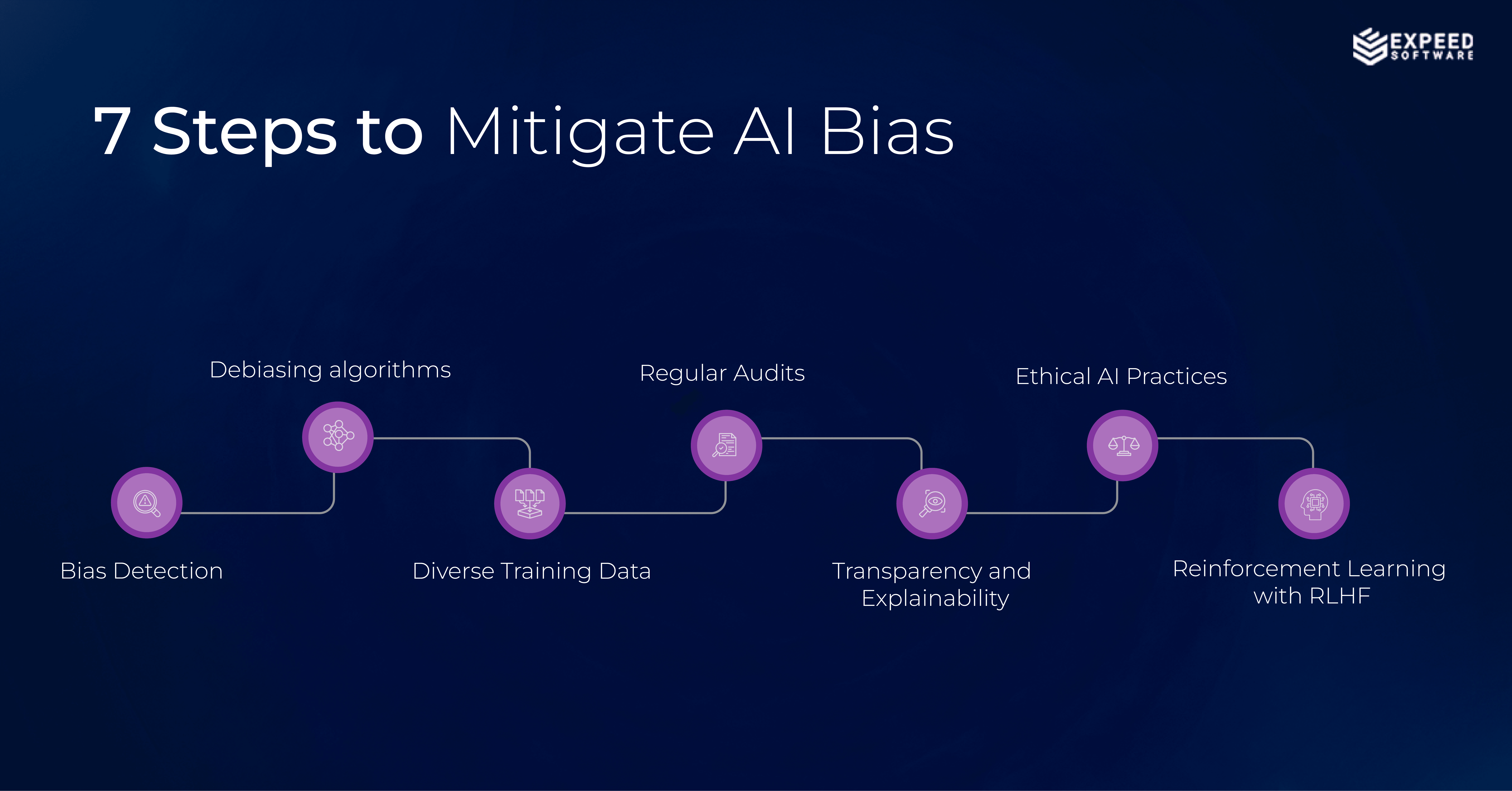
Bias cannot be fixed once and forgotten. It needs regular checks, clear rules, and human control.
Step 1: Bias Detection
Before using a model on real patients, test it across groups like race, gender, age, and disability. Check if error rates are higher for any group. These checks are as important as accuracy.
Step 2: Debiasing Algorithms
If bias is found, adjust the training process. This may include rebalancing data or using techniques that reduce the influence of hidden proxies, like zip codes or insurance types.
Step 3: Diverse Training Data
AI systems learn from data. Healthcare systems should work together to share data from different regions and populations. Tools like federated learning allow this without moving patient data, keeping HIPAA rules intact.
Step 4: Regular Audits
Bias can grow over time as patient populations change. Regular audits are needed to catch new problems. If a model starts failing a group, it should be fixed or stopped.
Step 5: Transparency and Explainability
Doctors need to know why a model made a decision. Simple explanation tools can show which factors mattered most. If income or insurance matters more than symptoms, doctors can ignore the result.
Step 6: Ethical Practices
Hospitals should create AI ethics teams that include doctors, data experts, and patient voices. These teams decide what fairness means and make sure systems follow shared values.
Step 7: Reinforcement Learning with RLHF
Clinicians play a vital role in training AI by reviewing and ranking model outputs. Through Reinforcement Learning from Human Feedback (RLHF), we ensure the AI's logic aligns with medical expertise and safety standards before it ever reaches the bedside.
A good healthcare AI system improves outcomes for all patients. Hospitals should track results across groups and make sure no one is left behind. Fair care is a sign of high-quality care.
Conclusion
AI and predictive analytics are powerful tools in modern healthcare. But without care, they can repeat and even worsen old inequalities. Algorithmic bias is not just a technical issue. It is a patient safety issue.
US healthcare systems must treat fairness as a core requirement, not an extra feature. This means testing models, using better data, keeping humans in control, and watching systems over time.
When built and used correctly, AI can support better, more equal care. The goal is not just smarter systems but fairer systems that see not just data points but people.