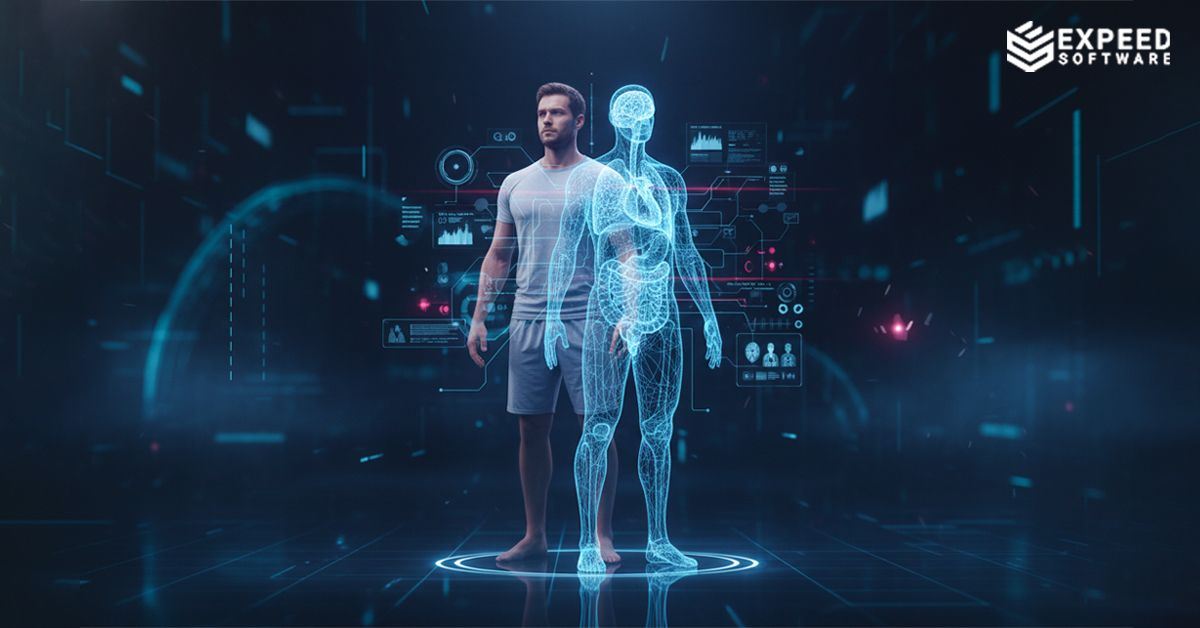
Healthcare is one such sector that is undergoing constant shifts to address increasing patient expectations. Hospitals and medical professionals are in a constant lookout to ensure faster, safer, and more predictable care. Digital twins have emerged as a promising concept in this space.
The idea of a digital replica of physical entities, systems, or processes that continuously update using real-world data was ambitious. Digital twins made this a reality by bringing in a futuristic touch to the hospitals and medical institutions. Though the concept of digital twins first emerged in the aerospace industry, it was soon adopted by the healthcare sector. By synchronizing real-time data from wearable devices, electronic health records, imaging, diagnostics, etc., digital twins help mirror the subject’s behavior accurately.
This article explores how digital twins work, why healthcare systems are embracing them, key applications, challenges, and more.
What makes Digital Twins Valuable in Healthcare?
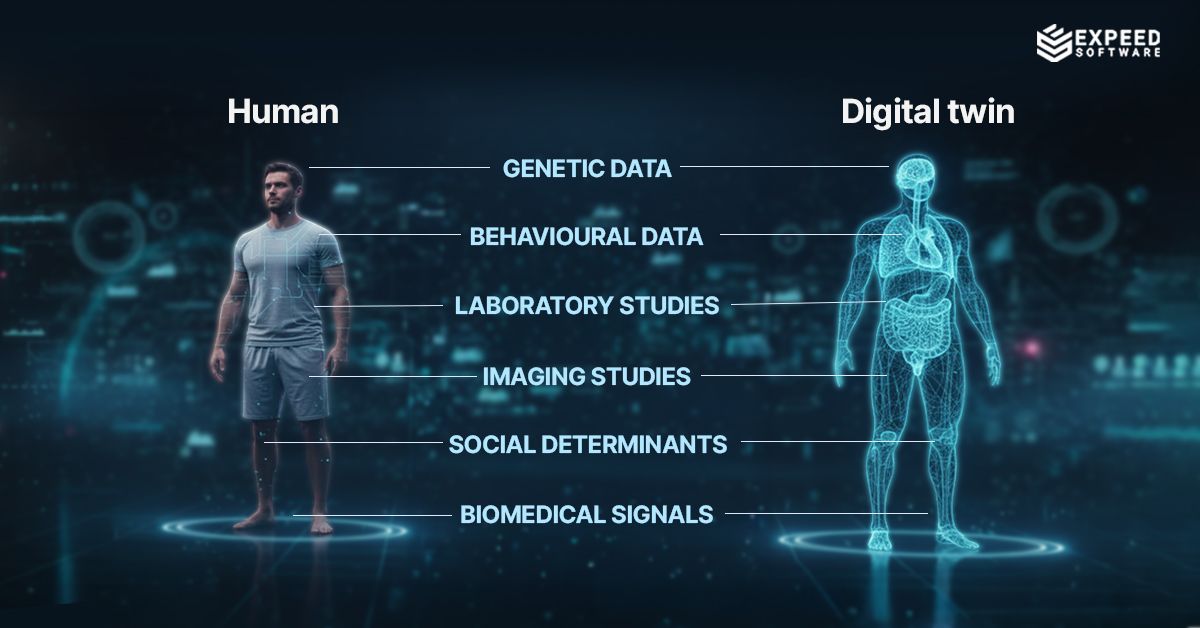
Healthcare traditionally relies on historical data, clinical observations, and generalized treatment guidelines. Digital twins shift this approach by offering dynamic, real-time models that evolve with the patient or system.
1. A move toward predictive and preventive medicine
It is always good to stay a step ahead, especially when it comes to one’s health. Rather than reacting after the symptoms surfaced, digital twins allow medical professionals to predict changes and adopt measures accordingly. For example, a digital replica of a patient’s heart can show early signs of deterioration long before standard tests detect them. This can guide timely interventions and reduce complications.
2. Individualized and precise treatment planning
Every patient responds differently to medication, surgery, or therapy. A digital twin allows doctors to simulate various treatment approaches and choose the one most suitable for that particular patient. This reduces trial-and-error and improves outcomes.
3. Operational improvements for hospitals and care systems
Beyond clinical care, digital twins can model patient flow, emergency room demand, bed allocation, staff schedules, and equipment usage. This helps hospitals minimize bottlenecks, reduce waiting times, and handle surges more efficiently.
4. Lower risks and costs in medical innovation
Drug discovery and medical device testing often require years of research and human trials. With digital twins, researchers can virtually test how a drug behaves in different patient profiles or how a medical device performs under varied conditions. This shortens development cycles and reduces overall costs.
How Digital Twins Work in Healthcare
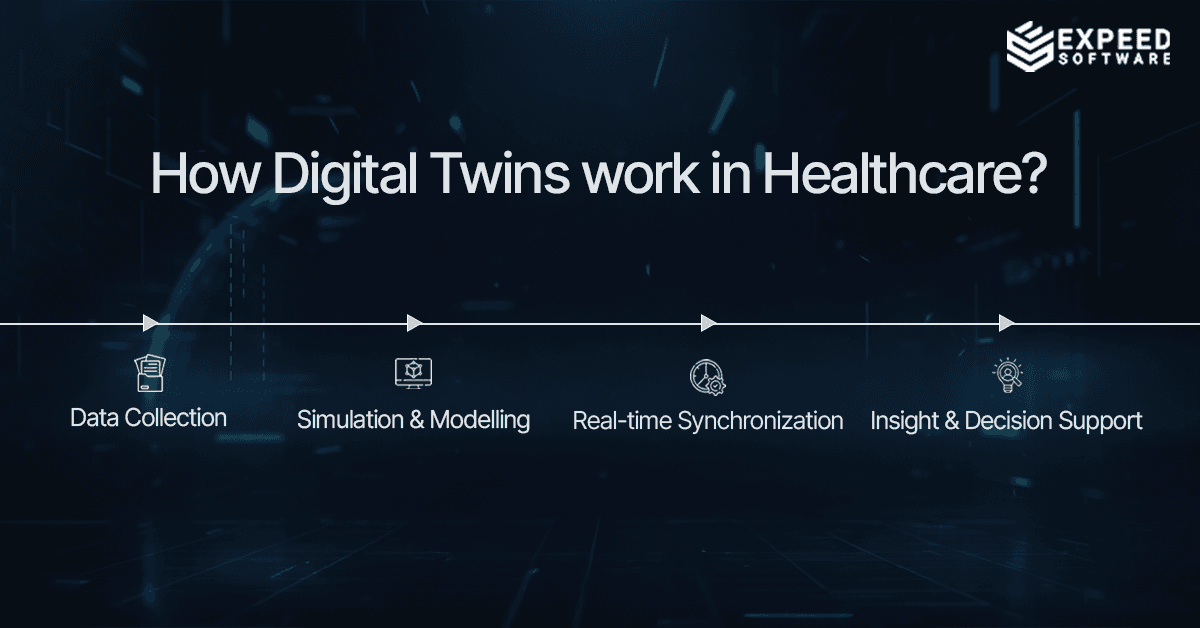
To function effectively in healthcare settings, digital twins are built using a structured approach that connects real-world data with ongoing analysis. Creating a healthcare digital twin involves four key components:
1. Data Collection
The system gathers information from:
- CT, MRI, and ultrasound imaging
- Electronic health records
- Wearable devices and remote monitoring tools
- Genetic and molecular datasets
- Lifestyle and behavioral inputs
This provides the foundation for building an accurate digital replica.
2. Simulation and Modeling
AI, machine learning, and computational models interpret the collected data. These models recreate how organs function, how diseases progress, or how hospital systems behave.
3. Real-time Synchronization
As the patient’s health changes, or as new data is recorded, the digital twin updates automatically. This ensures the model remains a living, evolving representation.
4. Insight and Decision Support
Clinicians and administrators can run simulations, test treatment strategies, predict outcomes, and analyze performance in a safe, controlled virtual environment.
This end-to-end cycle transforms data into actionable insights that improve both clinical and operational decisions.
Key Applications of Digital Twins in Healthcare
Digital twins in healthcare were introduced as a technical concept first, but it took no time for it to transform itself into a practical tool bearing numerous benefits. Currently being applied across multiple areas of the healthcare sector, digital twins ensure productive outcomes where prediction, precision, and planning matter most.
1. Personalized Medicine and Patient-Specific Twins
Any technology that can directly cater to human beings is considered valuable and that becomes the most important application of digital twins too. A patient-specific twin integrates data about anatomy, genetics, biomarkers, lifestyle, and real-time health metrics, thereby helping the clinicians to:
- Simulate how a patient will respond to a particular treatment
- Identify risks before symptoms appear
- Track chronic conditions like diabetes, hypertension, or heart disease
- Adjust medication dosages based on how the body is expected to respond
For example, cardiologists can use a digital twin of a patient’s heart to plan procedures with greater accuracy, reducing surgical complications and recovery time.
2. Surgical Planning and Virtual Procedure Rehearsals
Surgeons now use digital twins to map out procedures before entering the operating room. A 3D digital replica of an organ or vascular system reveals potential risks, anatomical variations, and complications. This allows the surgical team to:
- Choose the best surgical approach
- Test different implants or stents virtually
- Reduce time spent in the operating room
- Improve patient safety
Such pre-operative simulations are especially beneficial in cardiology, neurosurgery, and orthopedics, where precision is critical.
3. Hospital Management and System-Level Twins
While most discussions focus on patient-level benefits, hospital operations are another major beneficiary.
System-level digital twins can:
- Predict emergency room surges
- Optimize staffing based on patient inflow
- Streamline scheduling of diagnostic equipment
- Reduce wait times and improve patient experience
- Reduce overload on critical departments like the ICU
Hospitals using digital twins report improved bed turnover rates, better management of critical equipment, and faster emergency response planning.
4. Drug Discovery, Clinical Trials, and In-Silico Testing
Developing a new drug traditionally requires high investment and long timelines. Digital twins offer a smarter alternative. Researchers can simulate how a drug interacts with digital models of patient groups with different genetic, metabolic, or physiological characteristics.
This leads to:
- Faster identification of promising drug candidates
- Better dose optimization
- Reduced failure rates in early-stage trials
- The possibility of running “virtual clinical trials”
In the future, regulators may allow hybrid clinical trials where digital twins complement physical participants, making development safer and more efficient.
5. Wellness, Lifestyle, and Behavioral Health Twins
Digital twins are also expanding into preventive wellness. By combining lifestyle data, sleep patterns, activity levels, and biometric signals, digital twins can:
- Detect early signs of mental health deterioration
- Suggest lifestyle adjustments
- Prevent relapse in chronic conditions
- Support personalized fitness and nutrition planning
This pushes healthcare treatment toward everyday wellness and proactive risk management.
Challenges Limiting Large-Scale Adoption Of Digital Twins
While digital twins offer clear advantages, their large-scale adoption faces several challenges. Technical, regulatory, and ethical constraints continue to influence how quickly and widely the technology can be implemented in real healthcare environments.
1. Data privacy and regulatory concerns
Health data is extremely sensitive. Ensuring secure storage, patient consent, and compliance with regional regulations remains a key concern.
2. Need for interoperability
Healthcare systems often operate in silos. Fragmented data sources make it difficult to build a unified digital twin.
3. High computational and financial requirements
Developing and maintaining advanced simulation models requires infrastructure, talent, and long-term investment.
4. Validation and reliability issues
For clinical use, digital twins must match real-world outcomes with high accuracy. This demands rigorous testing and standardization.
5. Ethical questions
Who owns the twin? How should predictions be used? What happens if the twin suggests a different treatment than the doctor? These questions require clear guidelines.
The Future of Digital Twins
As healthcare systems continue adopting AI and data-driven tools, digital twins are expected to become a fundamental part of modern medical care.
1. Multi-omics integration for true precision medicine
Future twins will incorporate genomic, proteomic, microbiome, and metabolic layers to create a complete biological profile.
2. Rise of population-level digital twins
Governments and health agencies can simulate disease outbreaks, healthcare demand, and community health patterns for better planning.
3. Fully autonomous smart hospitals
Digital twins will play a central role in managing hospital infrastructure, predicting equipment failures, and automating workflows.
4. Hybrid clinical trials become mainstream
Virtual twins will complement human participants, reducing trial duration and improving safety.
5. AI-driven care personalization
With richer data streams from wearables and IoT devices, digital twins will deliver hyper-personalized care recommendations.
Conclusion
Digital twins can be considered as one of the most promising shifts in modern healthcare. By offering real-time insights, predictive capabilities, and personalized simulations, they bridge the gap between traditional care and intelligent, data-driven medicine.
Whether it’s designing patient-specific strategies or optimizing hospital operations, digital twins offer immense value. As data ecosystems strengthen and ethical frameworks evolve, digital twins will become an integral part of the healthcare sector.